


Six months of coastal exploring
Where to start… the last six months have been incredible! I have learnt so much from the internship and gained experience in a wide range of areas within the marine sector. Here’s what I got up to during my time as Coastal Explorer intern
Working together with my fellow Coastal Explorer intern, Hannah Newnham, our main project was a feasibility study focused on the establishment of a citizen science led small-shark tagging programme in Kent. To determine the project’s feasibility, we undertook independent research, sought advice from experts and organisations currently running elasmobranch tagging programmes in the UK, and engaged with local anglers to understand their attitude towards the project and gain their input in its development. I thoroughly enjoyed this work and it was great to gain experience in the early development stages of a conservation project.
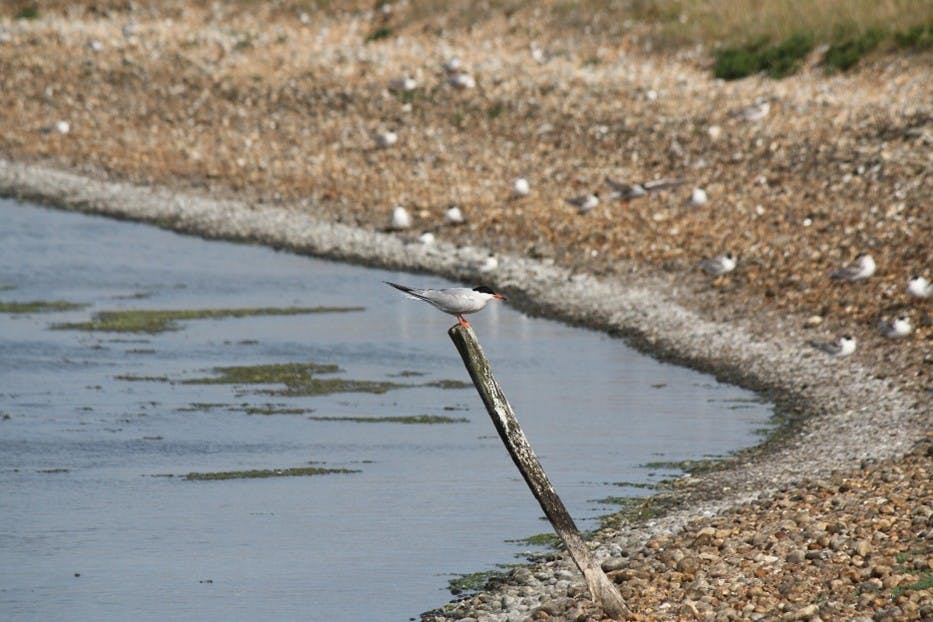
My individual project investigated avian predator pressure on beach-nesting birds at Rye Harbour Nature Reserve, Sussex, which supports breeding common and sandwich terns, black-headed gull and wader species, such as avocet. Myself and Hannah collected data alongside eight other volunteers during our visits to the site over the breeding season - it was fantastic to spend time on the reserve brushing up my coastal bird ID skills! I then analysed this data, in combination with ABEC’s breeding bird survey data, to determine levels of predation on the reserve and produced a consultancy-style report for the reserve manager
Hannah and I also worked with The Crown Estate on a marine spatial planning project aimed at identifying sanctuary zones for red-throated diver – a species impacted by offshore development. This project involved working closely with an expert group formed of multiple governmental organisations and a key learning experience for us was stakeholder engagement. Our role involved working closely with the TCE GIS team, where we gained insight in spatial modelling, and involved presenting findings to the expert group.
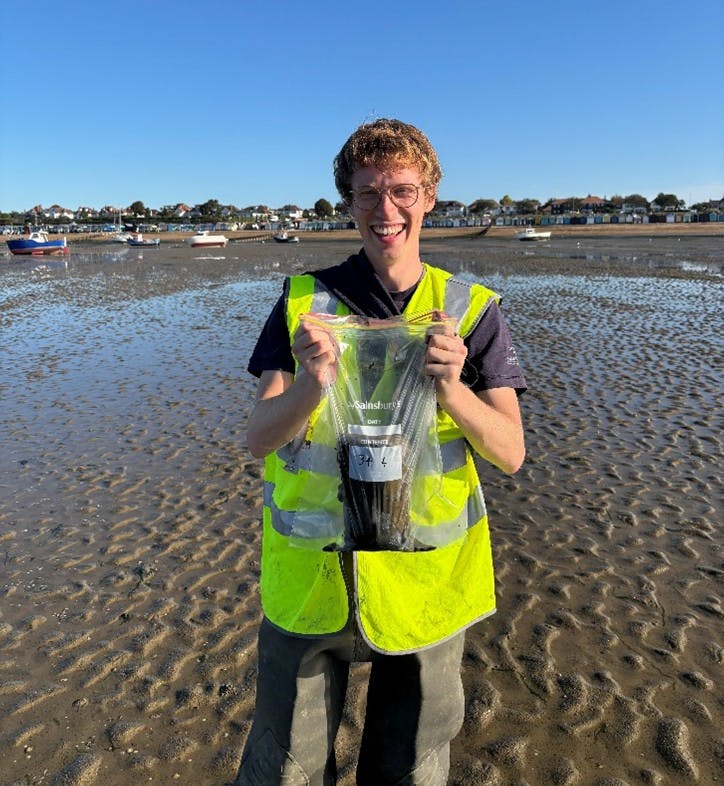
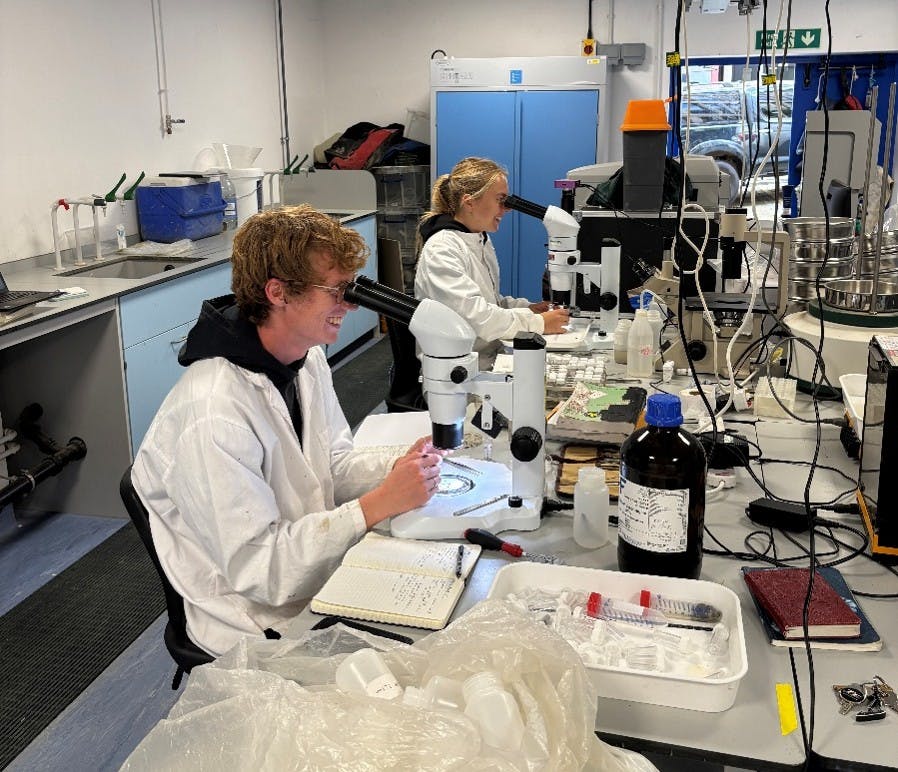
One of my highlights of the internship was all the fieldwork experiences - an opportunity to get out and explore the local marine environment! I helped to collected sediment samples as part of a monitoring project concerning the Benfleet and Southend Marshes SPA… this was rather muddy work but a lot of fun! This project also involved time in the lab at the University of Essex where I was upskilled in Particle Size Analysis and Infauna Analysis. I also had the opportunity to join ZSL on one of their seagrass seed collection surveys and undertook Bird Disturbance Surveys during the autumn as part of monitoring efforts at a coastal grazing marsh restoration site in Kent.
In addition to project work, I attended multiple conferences such as ReMeMaRe, Blue Finance 2025 and the UK Seagrass Symposium. These were an amazing opportunity to network and learn more about the exciting marine conservation and restoration work taking place around the UK. I also attended Whitstable Harbour and Boat Day, representing Kent Wildlife Trust Group, and organised a local beach clean with Hannah, in collaboration with Whitstable Maritime, as part of the Marine Conservation Society’s Great British Beach Clean week. I really enjoyed the local community engagement aspects of the internship!
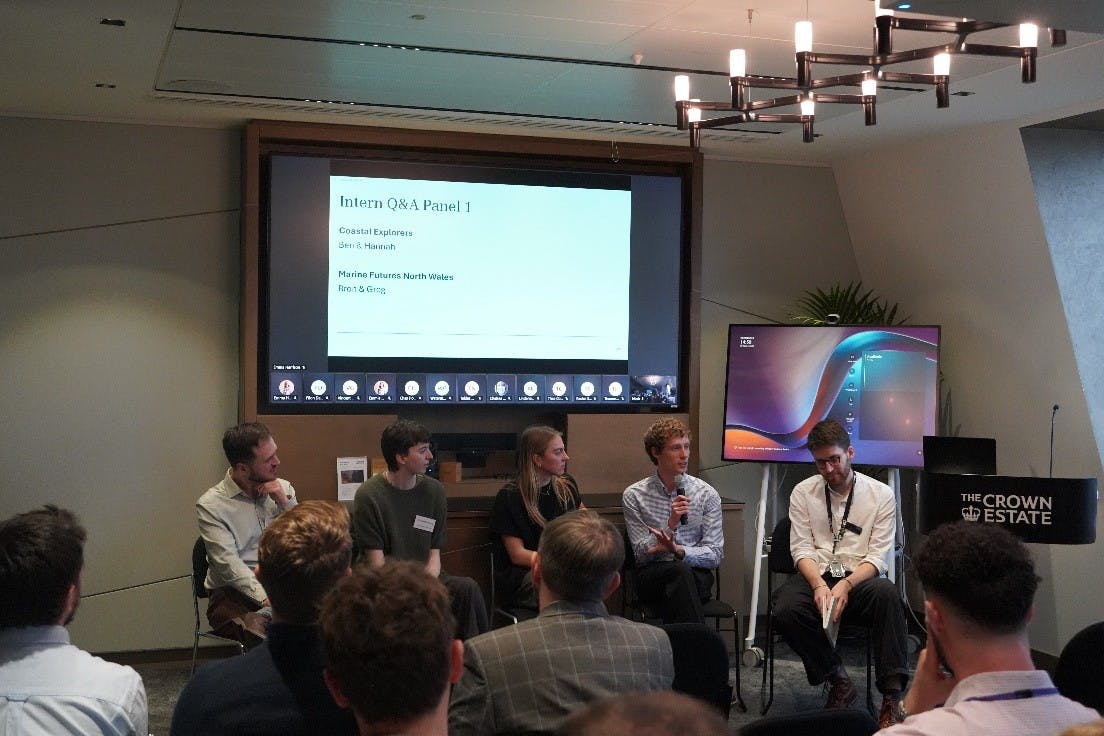
The internship came to an end in December with presentation events at TCE office in London, alongside the 2025 cohort of Marine Future interns, and at Tyland Barn, to the wider Kent Wildlife Trust team. It was so interesting to find out what the other Marine Futures interns had been working on and I look forward to attending these events in the future as part of the internship alumni!
The Coastal Explorer Internship has been an amazing experience which will be integral to my professional development in the marine sector… and it was a lot of fun along the way! If you’re reading this and are considering applying, I cannot recommend it enough!


