
Ornithological Surveys and Biotope Mapping
Benfleet and Southend Marshes
Benfleet and Southend Marshes Special Protected Area (SPA) is designated for its internationally and nationally important wintering populations of dark-bellied brent geese, grey plover, knot, ringed plover, and dunlin. The site comprises mudlflats, saltmarsh, pacific oyster reefs, eelgrass beds, and shingle habitats which support biodiverse marine invertebrate communities that provide vital feeding resource for wintering birds.
This project was undertaken by ABEC on behalf of Natural England to assess the abundance and distribution of the SPA designated features within the protected area. This data will be used to increase the quality of site condition assessments and enhance the local evidence base.
Habitat Mapping
The first stage of the project was to map the habitats and biotopes across the protected area.
We conducted ground-based Phase 1 intertidal habitat mapping using the digital programming application Mergin Maps. The results of this were combined with freely available aerial imagery to produce Phase 1 habitat maps in GIS.
Aerial drone surveys were conducted in some sections of the protected area as part of an experimental design to compare the habitat areas estimates derived from high-resolution drone imagery with those derived from free data sources. DJI Mavic 3 Enterprise (with RTK) and DJI RTK Base Station 2 were used to capture imagery, and raw drone footage was processed in WebODM Lightening to produce orthophotos and Digital Terrain Models (DTMs). Drone derived data was particularly useful at mapping saltmarsh extent due to its precision and highly detailed outputs.
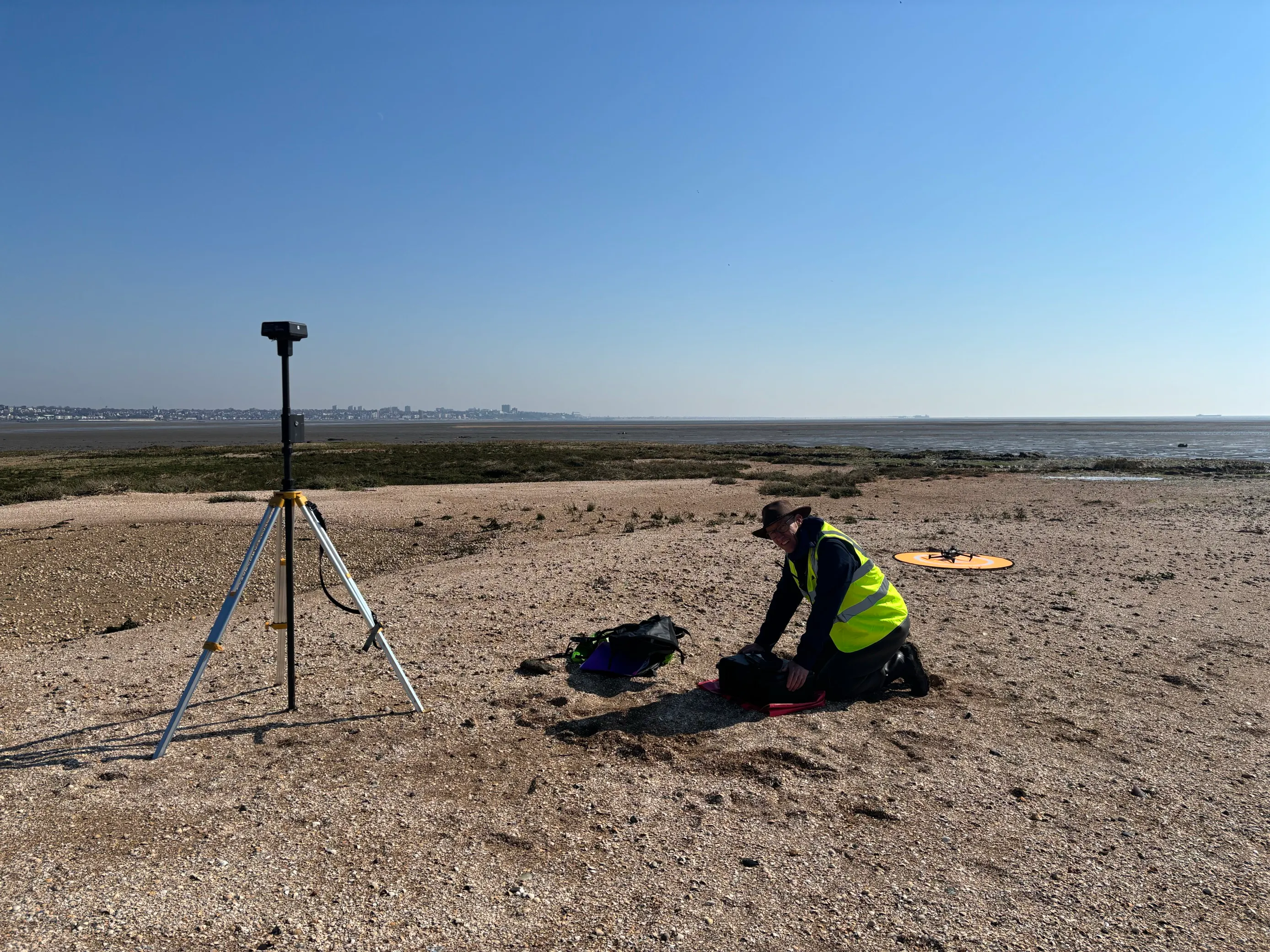
One of our licenced drone pilots, Paul Grattan, undertaking an aerial survey.
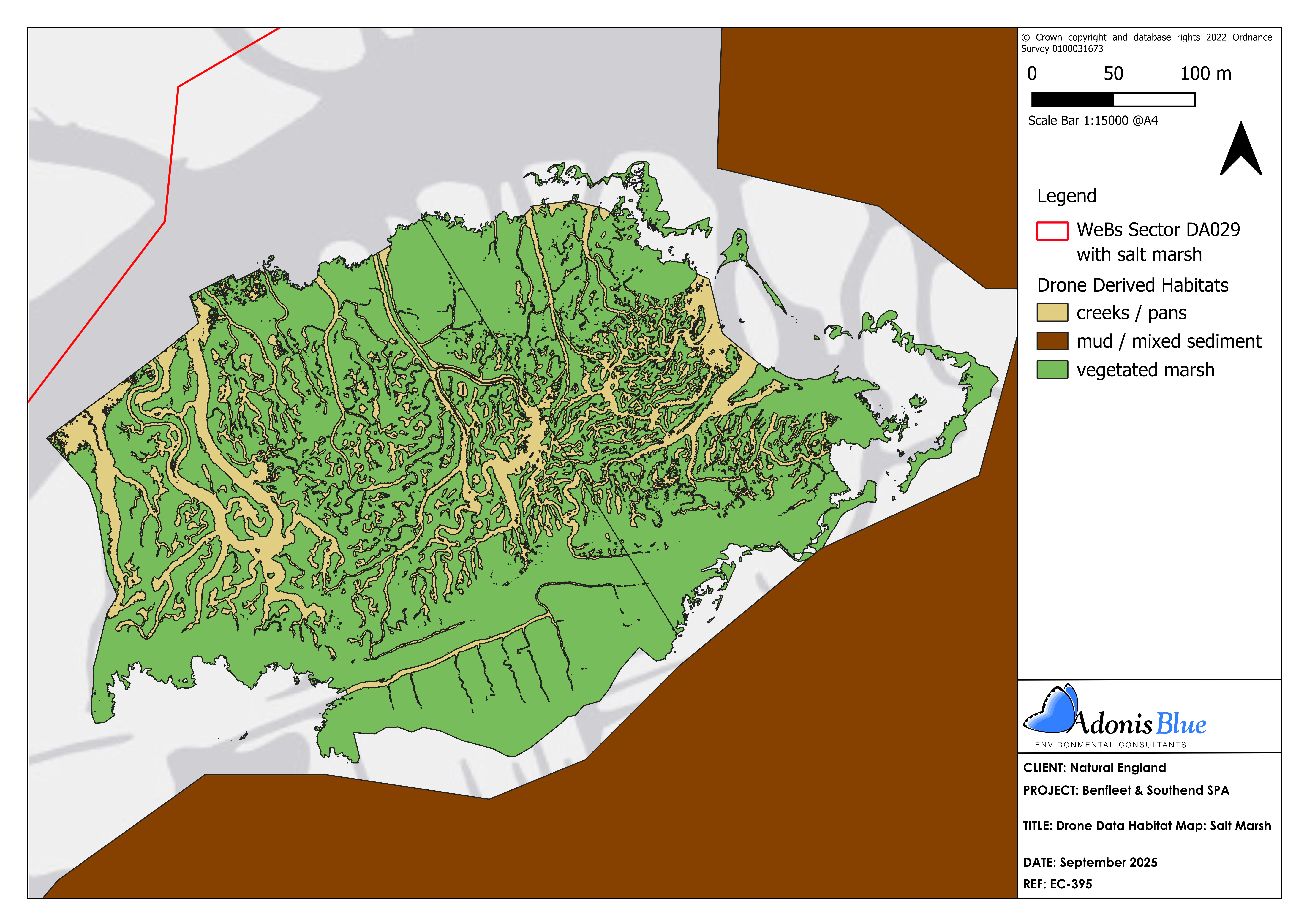
Mapped saltmarsh habitat derived from drone data of intertidal habitats.
Particle Size Analysis
Particle Size Analysis (PSA) was undertaken to infer sediment characteristics of the SPA’s intertidal habitats and determine substrate types.
This involved collecting 15cm-deep sediment core samples in the field. Seaward extending transects were designed across the site, most samples were collected on foot but where this was not possible, samples were collected via vessel. This work was conducted in collaboration with Panthalassa Ltd.
From the field, the samples were taken to the University of Essex, a partner we have been working closely with on this project. In the laboratory, our coastal team processed and analysed the sediment samples through sieve analysis and laser diffraction. The results of this were used to define sediment types.
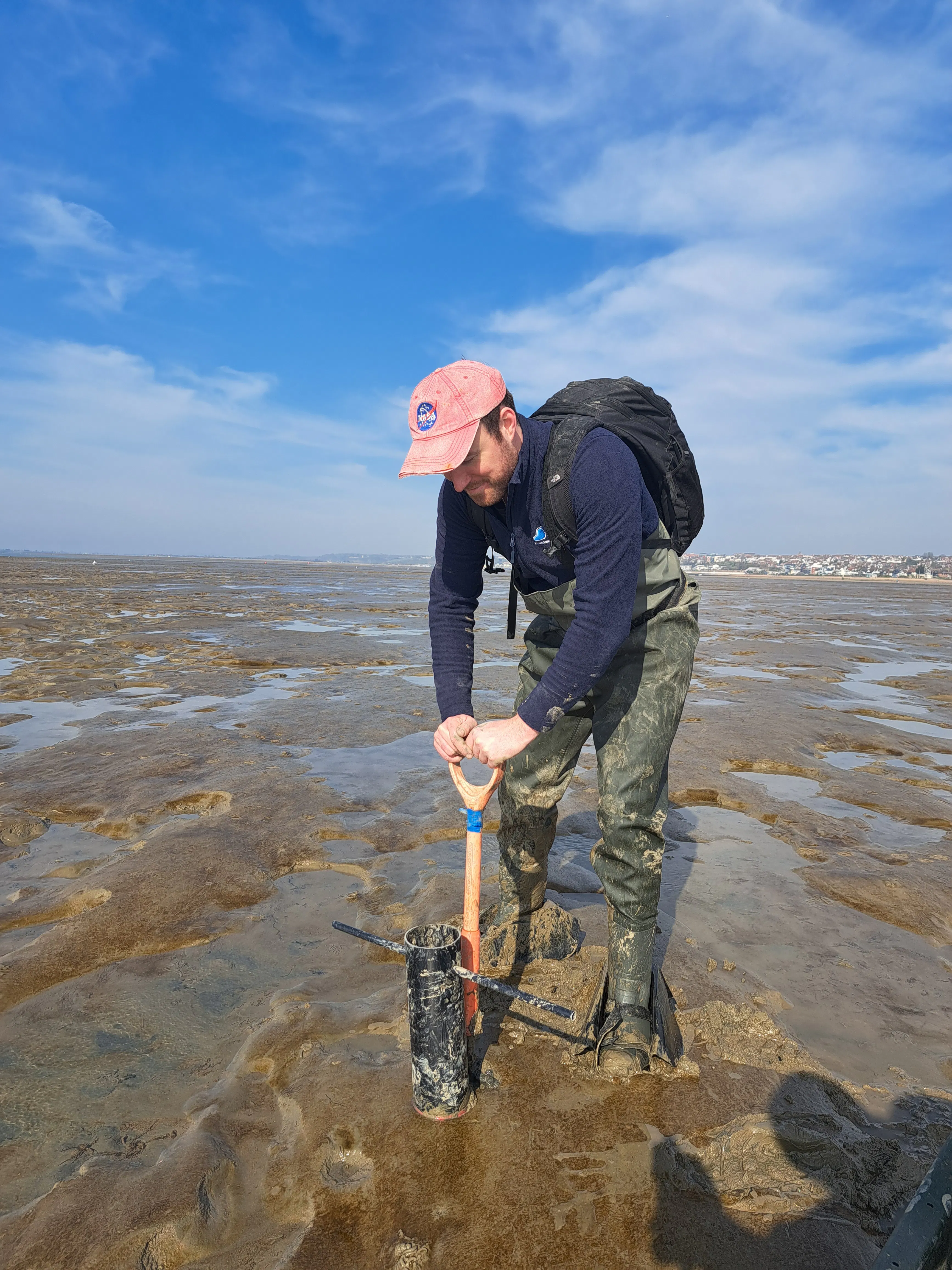
Max Renton (Coastal and Marine Ecologist) undertaking sediment core sampling.
Infaunal Sampling
Infaunal sampling and analysis were undertaken to identify and map the extent and distribution of biotopes and biotope communities. An assessment of bird prey resource biomass was also undertaken.
For infaunal sampling, 15cm cores were collected along transects on-foot and via vessel. For the prey biomass assessment, deeper 30cm cores were taken to cover the depth birds are known to forage within the sediment. Sampling was undertaken in autumn to ensure that infauna was at peak abundance prior to the arrival of overwintering birds.
In the laboratory, samples were processed using nested sieves. All biological material retained in the sieves were preserved. Macrofauna were taxonomically identified and abundance counts were taken for each taxon. Total biomass of each identified taxon was also measured. For the bird prey resource cores, size class of infauna was recorded.
Common species included ragworm (Hediste diversicolor), common cockle (Cerastoderma edule), and Baltic tellin (Macoma bathica).
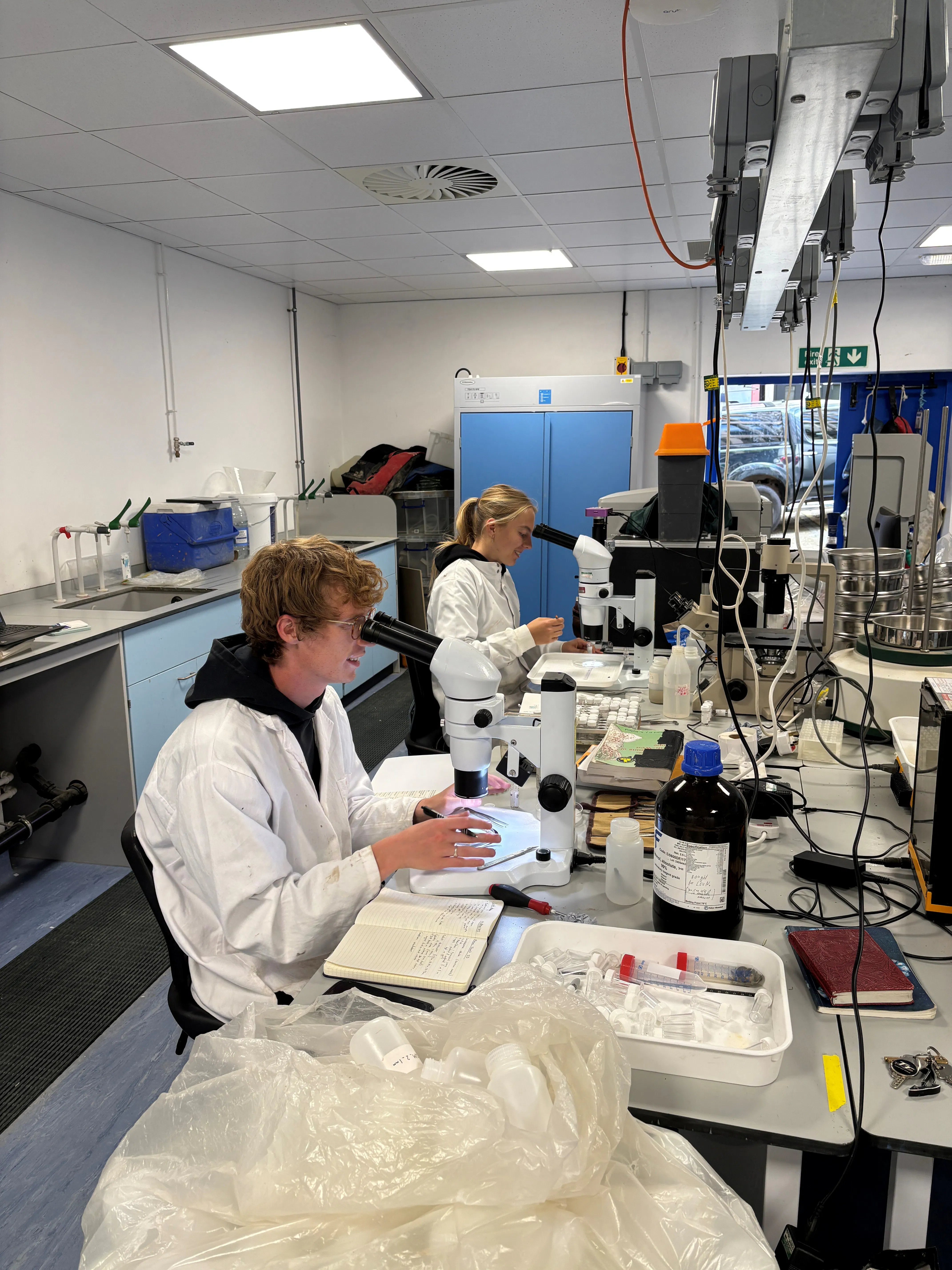
ABEC team working at the University of Essex Lab
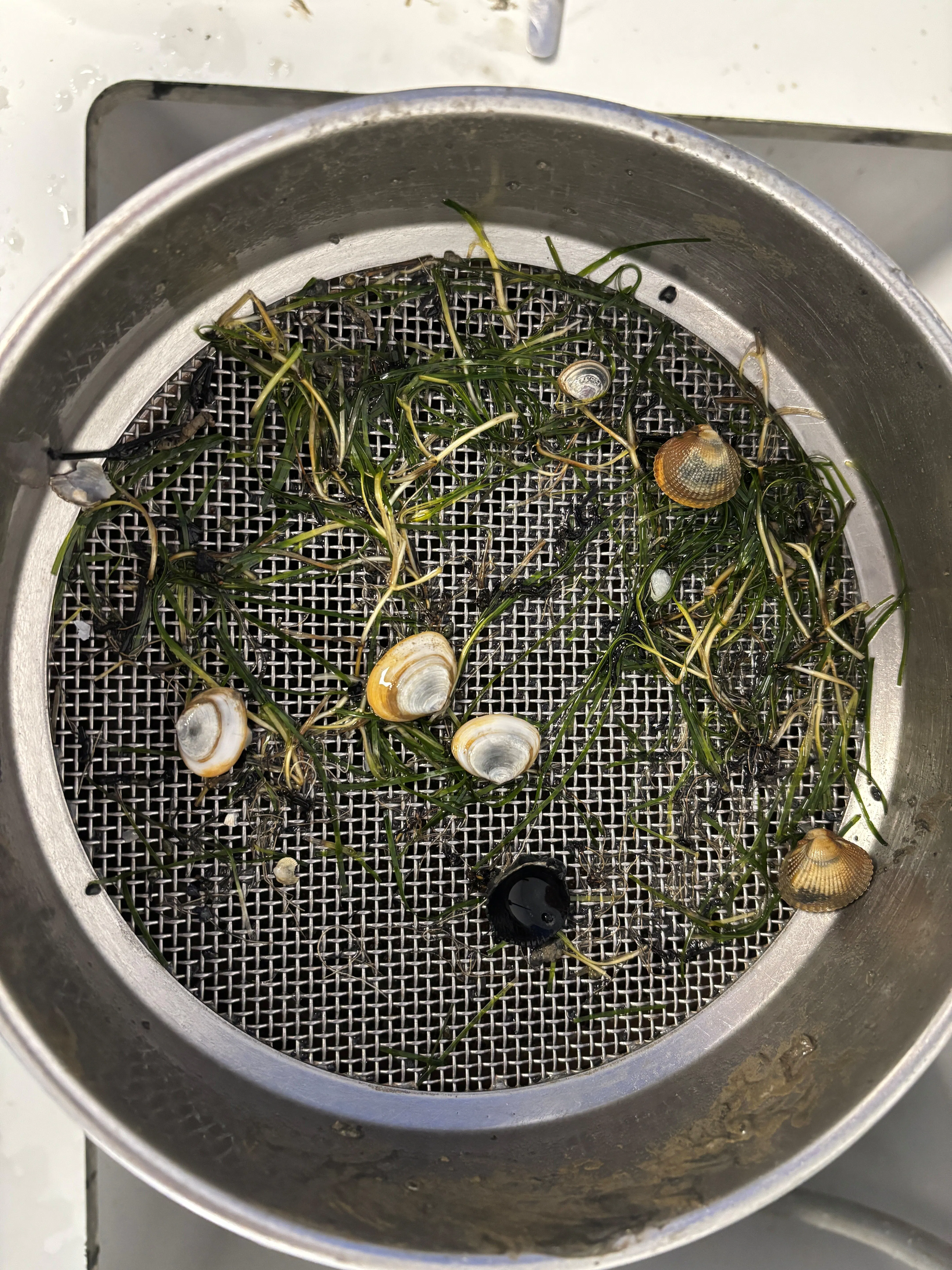
Sieving through seagrass!
Quadrat surveys
A key habitat type of the SPA is Pacific oyster reefs. A non-native species, Pacific oysters are believed to have established locally having ‘escaped’ from aquaculture ventures in the early 1900s. The species is now abundant across intertidal areas around the southeast coast of England. While there is concern that Pacific oysters can encroach upon ecologically important intertidal mud flats, oyster reefs provide important sheltering and foraging habitat for many species.
Quadrat biodiversity surveys were conducted within the Pacific oyster reef to record the epifaunal diversity and abundance. We found species such as common periwinkle (Littorina littorea) and blue mussel (Mytilus edulis) within these habitats.
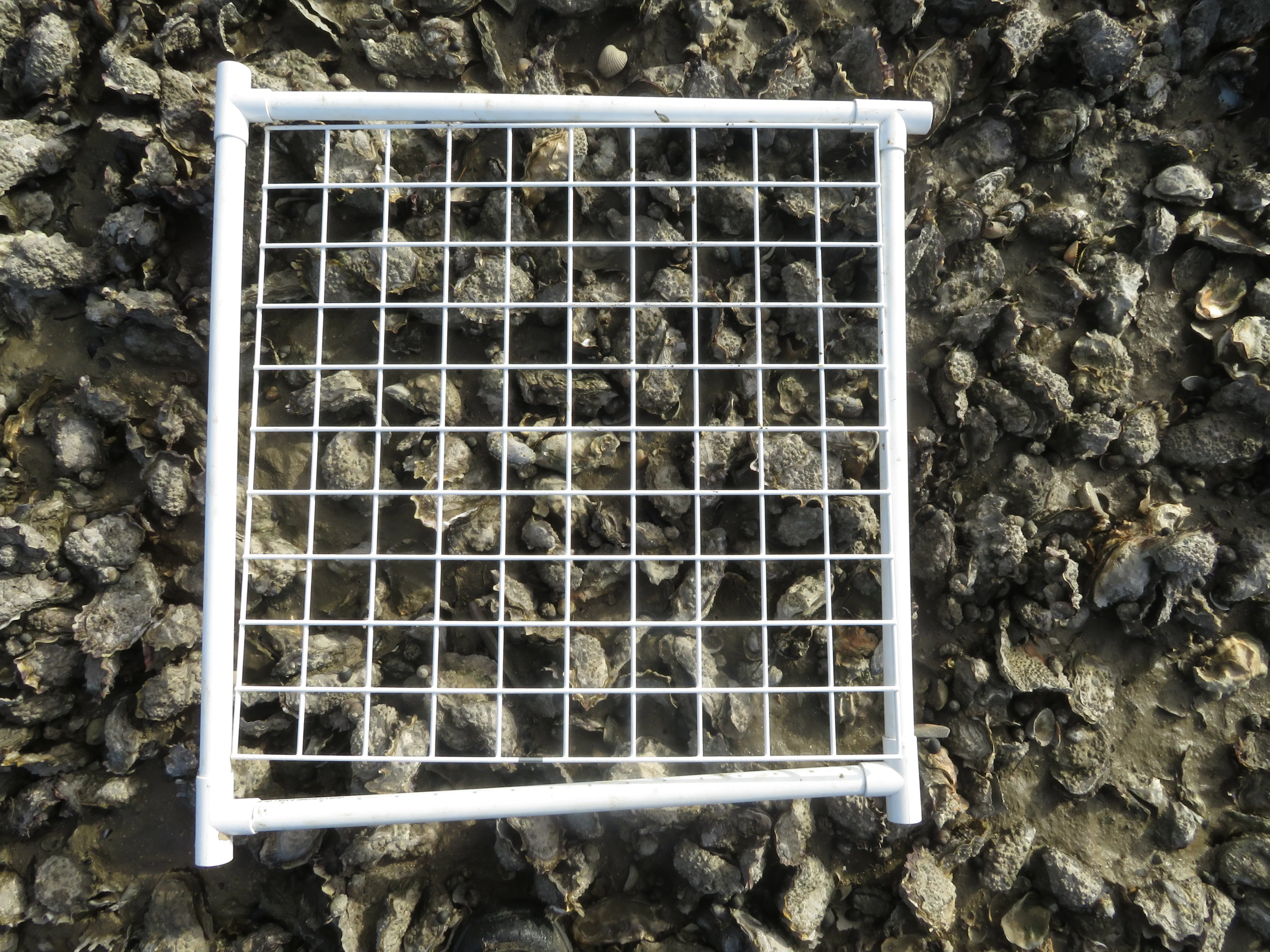
Quadrat biodiversity sampling of Pacific oyster (Magallana gigas) reefs.
Bird counts
Led by our experienced ornithological survey team, Wetland Bird Survey (WeBS) Low Tide Counts (LTC) during the winter to survey the abundance and distribution of waterbirds using the SPA.
All species were recorded, but priority focus was given to the SPA's designated non-breeding bird features: Dark-bellied Brent Goose (Branta bernicla bernicla), Dunlin (Calidris alpina), Grey Plover (Pluvialis squatarola), Knot (Calidris canutus), and Ringed Plover (Charadrius hiaticula) – some of these species were observed aggregating in huge numbers! Count data was recorded spatially using Mergin Maps software.
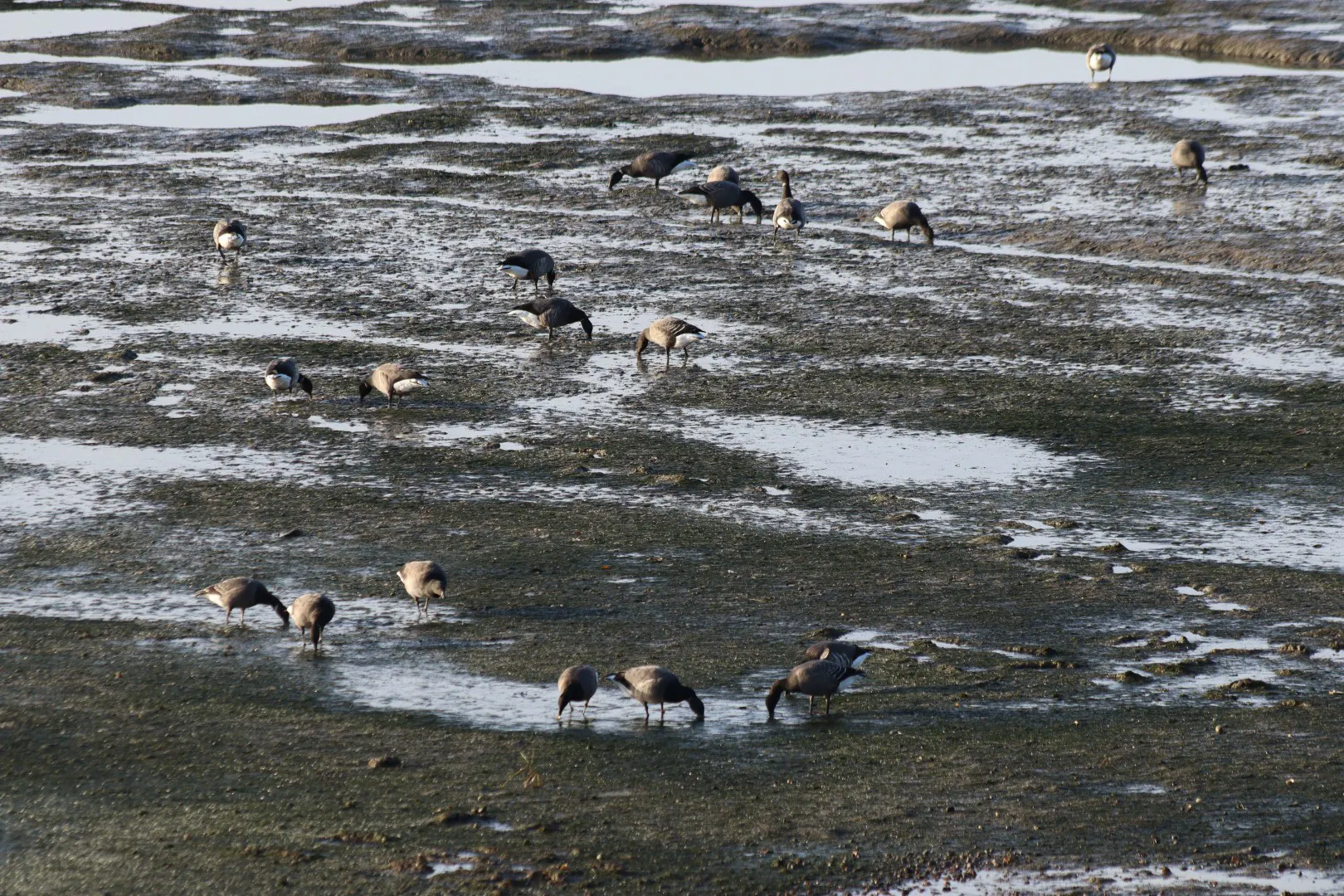
Dark-bellied brent geese (Branta bernicla bernicla) feeding on seagrass.
The project in numbers
- 88 Particle Size Analysis samples
- 50 Infaunal Analysis samples - 68 taxa recorded and over 10 biotopes identified
- 15 days of Phase I Habitat Surveys - over 1800 ha of intertidal habitats mapped
- 17 days of wintering bird surveys - 38 bird species, 82,645 individulas
- 10 Bird Resource Cores
- 9 Quadrat Biodiverity surveys
This project has been a great success and collaborative effort, producing robust data and insightful results.
ABEC are proud to be helping to improve future monitoring and management of the Benfleet and Southend Marshes SPA.
![]()
Crawley Green Infrastructure & Biodiversity Net Gain Sites
The Client Crawley Borough Council (CBC) commissioned a strategic study to identify and prioritise opportunities for Green Infrastructure (GI), Biodiversity Net Gain (BNG) and nature recovery across the borough. The…Green Infrastructure AssessmentsGreen FinanceLPABNGCrawley


